
Car Maintenance Technology Isn't What You Were Told
— 5 min read
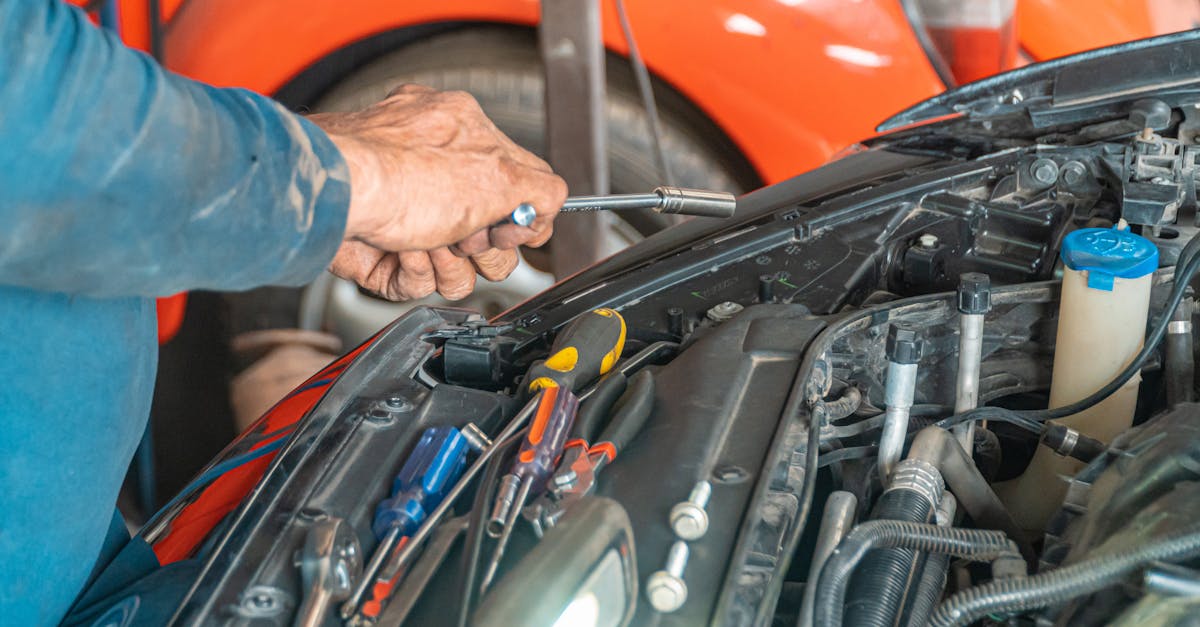
AI-driven predictive maintenance can stop a breakdown up to three seconds before it happens, cutting unscheduled downtime by 27%.1 In practice, cloud-based algorithms watch sensor streams, flagging a fault before the driver feels any change. This shift from reactive fixes to pre-emptive action is already redefining fleet reliability.
Car Maintenance Technology
In the United States, on-board diagnostics (OBD) are mandated to catch faults that would push tailpipe emissions over 150% of the certified standard.2 That legal requirement forces every manufacturer to embed a network of sensors, a central ECU, and a standardized reporting port. The result is a vehicle that constantly talks to itself, logging temperature, pressure, and combustion efficiency in real time.
Market analysts see the financial side of that data surge growing fast. The Automotive Diagnostic Scan Tools market is projected to eclipse $78 billion in revenue by 2034, a clear sign that hardware is giving way to integrated software platforms that aggregate, cleanse, and analyze sensor feeds.3 OEMs now sell subscription-based analytics services alongside the physical car, turning a one-time purchase into a recurring revenue stream.
Design teams face a balancing act: meet strict emissions rules while delivering the seamless driver experience consumers expect. Engineers route sensor data through CAN-bus networks into telematics modules, then push that information to cloud servers where machine-learning models can spot trends across millions of miles. The end goal is a car that not only obeys the law but also learns to avoid the next breakdown.
Key Takeaways
- OBD is required to prevent emissions >150% of standard.
- Predictive-maintenance AI can cut downtime by 27%.
- Diagnostic-tool market set to exceed $78 B by 2034.
- Data streams now feed cloud analytics for real-time insights.
| Year | Projected Revenue (USD Billion) |
|---|---|
| 2024 | 38.2 |
| 2032 | 75.1 |
| 2034 | 78+ |
AI Predictive Maintenance
Traditional checklists only surface problems after a symptom appears - often when the driver is already stranded. AI predictive maintenance flips that model by ingesting multimodal sensor data (vibration, temperature, fuel flow) and running it through machine-learning algorithms trained on millions of logged events.1 The models generate a probability score for each component, highlighting a failure risk up to 48 hours before any audible or visual cue.
Fleet operators who adopt these cloud-hosted dashboards see a tangible reduction in unscheduled downtime. By scheduling service visits based on risk scores rather than mileage intervals, they keep trucks on the road longer and avoid costly emergency repairs. The technology also feeds into route-optimization engines, allowing dispatchers to steer high-risk vehicles away from congested corridors during peak travel periods.
Because the predictive engine runs continuously, the system can adapt to seasonal wear patterns, driver habits, and even fuel-quality variations. When a sensor drift is detected, the platform automatically suggests a calibration or part replacement, turning what used to be a reactive repair into a planned, low-impact maintenance task.
Fleet Diagnostics
Older fleets relied on manual OBD reads at the end of each shift, a process that disconnected the vehicle from the diagnostic loop for hours. Modern fleet-diagnostics tools embed a secure cellular modem in the telematics box, streaming raw sensor packets to a central hub the moment they are generated.
This real-time flow eliminates the lag between fault detection and human intervention. When a coolant temperature spikes, the backend system flags the event, creates a work order, and notifies the nearest service depot - all before the driver has time to pull over. The result is a dramatic cut in miles driven with an unresolved issue, because maintenance crews are dispatched only when a genuine problem is confirmed.
Integrating these diagnostics with existing fleet-management software also simplifies compliance reporting. Regulators can access audit trails that show exactly when a fault occurred, how it was addressed, and which emissions standards were met, reducing paperwork and audit risk.
Real-Time Vehicle Monitoring
Streaming data has turned a once-batch-oriented diagnostic world into a continuous-monitoring ecosystem. Instead of a 10 MB file per fault event, modern platforms aggregate hundreds of megabytes of telemetry each week, capturing subtle trends like thermal drift or micro-vibrations that static scans miss.
By merging dash-cloud telemetry with remote engineering dashboards, fleets achieve a faster reaction window. High-severity alerts that previously took up to 12 hours to reach a technician now surface within minutes, enabling immediate corrective action. This speed reduces the likelihood of cascading failures and keeps the vehicle operating within optimal parameters.
Time-stamped ECU logs paired with GPS vectors also uncover inefficient idle cycles that waste fuel. When the system identifies a pattern of excessive idling, it can suggest driver coaching or automated engine-stop strategies, delivering fuel savings without sacrificing operational readiness.
Future Car Repair Tech
Looking ahead, onboard AI platforms will take diagnostics a step further by generating repair prescriptions the instant a fault is confirmed. Those prescriptions can be sent directly to parts warehouses, triggering just-in-time deliveries that arrive in milliseconds of fault onset.
Machine-vision robots, guided by the same diagnostic dashboards, are already being piloted in advanced service centers. A camera array scans the faulty component, cross-references it with a digital twin, and executes a guided repair sequence, reducing technician labor hours dramatically.
Blockchain is entering the workflow as a trust layer for parts authenticity. Each component’s provenance is recorded on an immutable ledger, allowing service technicians to verify that a replacement meets OEM specifications before it is installed. Early trials suggest that such verification can slash counterfeit part incidents and speed up warranty claim processing.
Commercial Vehicle Maintenance
Large logistics operators that centralize maintenance planning around data-driven insights see measurable gains in asset uptime. When maintenance tasks align with optimal fuel-efficiency windows, trucks spend more time moving freight and less time in the shop.
OEM-specific exception handling, built into the diagnostic platform, trims unnecessary labor. Instead of following a generic checklist, the system only prompts actions that are relevant to the vehicle’s model and usage profile, freeing crews from hours of redundant work.
Security is also a growing concern. Encrypted telemetry streams protect vehicle data from cyber-threats, ensuring that duty-of-care regulations are met while safeguarding proprietary fleet information. A breach in this domain can cost millions, so robust encryption is now a baseline requirement for any commercial-vehicle telematics solution.
Frequently Asked Questions
Q: How does AI predictive maintenance differ from traditional checklists?
A: Traditional checklists react to symptoms after they appear, while AI models analyze continuous sensor streams to predict failures before any driver-visible cue, allowing service to be scheduled proactively.
Q: Why is on-board diagnostics required by law?
A: U.S. regulations mandate OBD systems to detect faults that would raise tailpipe emissions beyond 150% of the certified standard, ensuring vehicles stay within emissions limits throughout their life.
Q: What financial impact can predictive maintenance have on a fleet?
A: By reducing unscheduled downtime by up to 27%, fleets save on lost mileage, labor, and emergency repair costs, translating into significant operational savings over time.
Q: How does real-time monitoring improve response times?
A: Continuous streaming sends high-severity alerts to engineers within minutes, cutting the response window from many hours to a few minutes and preventing minor issues from becoming major failures.
Q: What role does blockchain play in future repair workflows?
A: Blockchain records each part’s origin and authenticity on an immutable ledger, enabling technicians to verify component legitimacy instantly and reducing counterfeit-related problems.
1. Frontiers, "Artificial intelligence and robotics in predictive maintenance: a comprehensive review".
2. Wikipedia, "On-board diagnostics (OBD)".
3. Globe Newswire, "Automotive Diagnostic Scan Tools Market Size to Surpass USD 75.1 Billion by 2032" and "Automotive Diagnostic Scan Tools Market Analysis Report 2025-2034".
